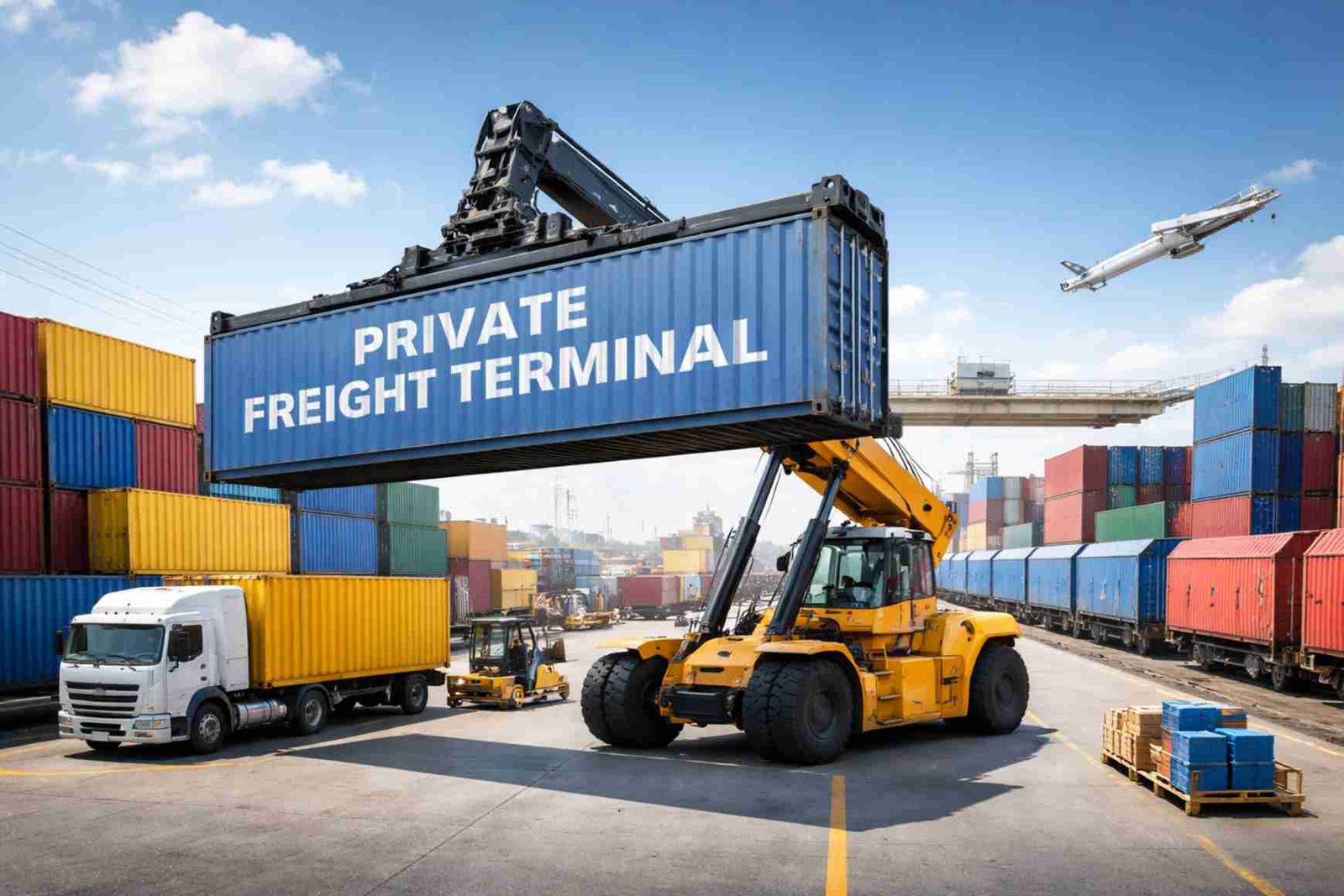
Moving goods from one place to another is not easy. Many companies face delays because public ports and freight terminals are crowded. Trucks wait in long lines. Trains do not always arrive on time. These problems can slow down business and increase costs.
To solve this, many companies now use private freight terminals. These are special places where goods are loaded, unloaded, stored, and moved, but only for one company or a small group of companies. Because these terminals are private, the owners have more control over how things work. This helps them move goods faster, more safely, and at lower long-term cost.
What Is a Private Freight Terminal?
A private freight terminal is a place where goods are handled and stored. It is owned or managed by a private company, not by the government or port authority. Only selected users are allowed to use it.
Private freight terminals can be connected to:
-
Roads (for trucks)
-
Rail lines (for trains)
-
Ports or inland shipping routes
Main Features of Private Freight Terminals
-
Used by one company or a small group
-
Designed for specific types of goods
-
Has its own rules and schedules
-
More secure than public terminals
-
Built to match business needs
Private vs Public Freight Terminals
| Topic | Private Freight Terminal | Public Freight Terminal |
|---|---|---|
| Owner | Private company | Government or port |
| Who can use it | Selected users | Anyone |
| Waiting time | Usually low | Often high |
| Control | High | Limited |
| Flexibility | High | Low |
Key Parts of a Private Freight Terminal
A private freight terminal has many parts that help move goods smoothly.
Main Areas and Equipment
-
Entry and exit points
-
Gates for trucks
-
Rail tracks for trains
-
-
Storage areas
-
Warehouses
-
Open yards for containers
-
-
Handling machines
-
Cranes
-
Forklifts
-
Reach stackers
-
-
Computer systems
-
Systems to track goods
-
Systems to plan truck and train movements
-
-
Safety and security
-
Cameras
-
Fences
-
Fire safety tools
-
Read also: Costco Rival Launches Megastore
How a Private Freight Terminal Works
Private freight terminals follow clear steps to handle goods.
Simple Work Flow
-
Trucks or trains arrive at the terminal
-
Goods are checked at the gate
-
Goods are unloaded
-
Goods are stored or moved directly to another truck or train
-
Goods are sent out to the next destination
Main Goals of Operations
-
Reduce waiting time
-
Move goods quickly
-
Use space and machines well
-
Avoid traffic inside the terminal
-
Keep goods safe
Benefits of Private Freight Terminals
Private freight terminals give many advantages to businesses.
Main Benefits
-
Better control over daily operations
-
Less waiting time for trucks and trains
-
Faster delivery of goods
-
Lower long-term costs
-
More safety for valuable goods
-
Custom design for special cargo (like food, cars, or chemicals)
Who Uses Private Freight Terminals?
Many types of businesses use private freight terminals.
Common Industries
-
Factories and manufacturing companies
-
Retail and supermarket supply chains
-
Car and vehicle companies
-
Farming and food companies
-
Mining and bulk goods companies
-
E-commerce and delivery companies
Common Uses
| Industry | How They Use Private Terminals |
|---|---|
| Manufacturing | Bring raw materials to factories |
| Retail | Move goods to warehouses and stores |
| Automotive | Handle car parts and vehicles |
| Agriculture | Move grains and food products |
| E-commerce | Sort and send parcels faster |
Building a Private Freight Terminal
Companies can build private freight terminals in two main ways.
Types of Development
-
Greenfield – Build a new terminal on empty land
-
Brownfield – Improve an old industrial site
What to Look for in a Location
-
Close to highways
-
Close to rail lines
-
Enough land to grow in the future
-
Easy access for trucks
-
Allowed by local land-use rules
Rules and Legal Requirements
Private freight terminals must follow many rules.
Common Rules to Follow
-
Land and building permits
-
Safety rules for workers
-
Environmental rules (air, noise, water)
-
Rail safety rules (if trains are used)
-
Customs rules (if handling import/export goods)
Following these rules helps avoid fines and delays.
Technology in Private Freight Terminals
Modern terminals use technology to work faster and better.
Common Technology Tools
-
Computer systems to track goods
-
Barcode or RFID scanners
-
Automated entry gates
-
Cameras and sensors
-
Software to plan yard space and vehicle movement
How Technology Helps
| Area | Benefit |
|---|---|
| Gate entry | Faster truck check-in |
| Yard space | Better use of space |
| Tracking | Know where goods are |
| Equipment care | Less machine breakdown |
| Planning | Better daily schedules |
Costs and How Money Is Made
Private freight terminals cost a lot to build, but they can save money over time.
Main Costs
-
Buying or renting land
-
Building warehouses and yards
-
Buying machines
-
Paying workers
-
Electricity and maintenance
-
Computer systems
Ways Terminals Earn Money
-
Fees for loading and unloading
-
Fees for storing goods
-
Fees for using the terminal
-
Extra services like packing and labeling
Challenges and Risks
Private freight terminals also have problems to manage.
Common Challenges
-
High cost at the start
-
Not enough cargo volume
-
Long time to get approvals
-
Need for trained workers
-
Technology problems or cyber risks
-
Changes in market demand
Good planning and step-by-step building can reduce these risks.
Environment and Sustainability
Many companies now want greener terminals.
Simple Green Actions
-
Use energy-saving lights and buildings
-
Use electric or low-pollution machines
-
Install solar panels
-
Move more goods by train instead of trucks
-
Reduce waste and save water
These steps help protect the environment and improve company image.
Future of Private Freight Terminals
Private freight terminals will keep changing.
Future Trends
-
More automation and smart machines
-
Better use of data and software
-
More inland terminals near cities
-
Use of electric trucks and equipment
-
Stronger links between private and public transport networks
Conclusion
Private freight terminals help companies move goods faster, safer, and with more control. They reduce waiting time, improve planning, and support long-term cost savings. Even though they are expensive to build and need many approvals, they can bring strong benefits for businesses with large or special cargo needs.
In the future, private freight terminals will become smarter, greener, and more important for global and local supply chains. For many companies, they are no longer just an option—they are a key part of doing business well.
