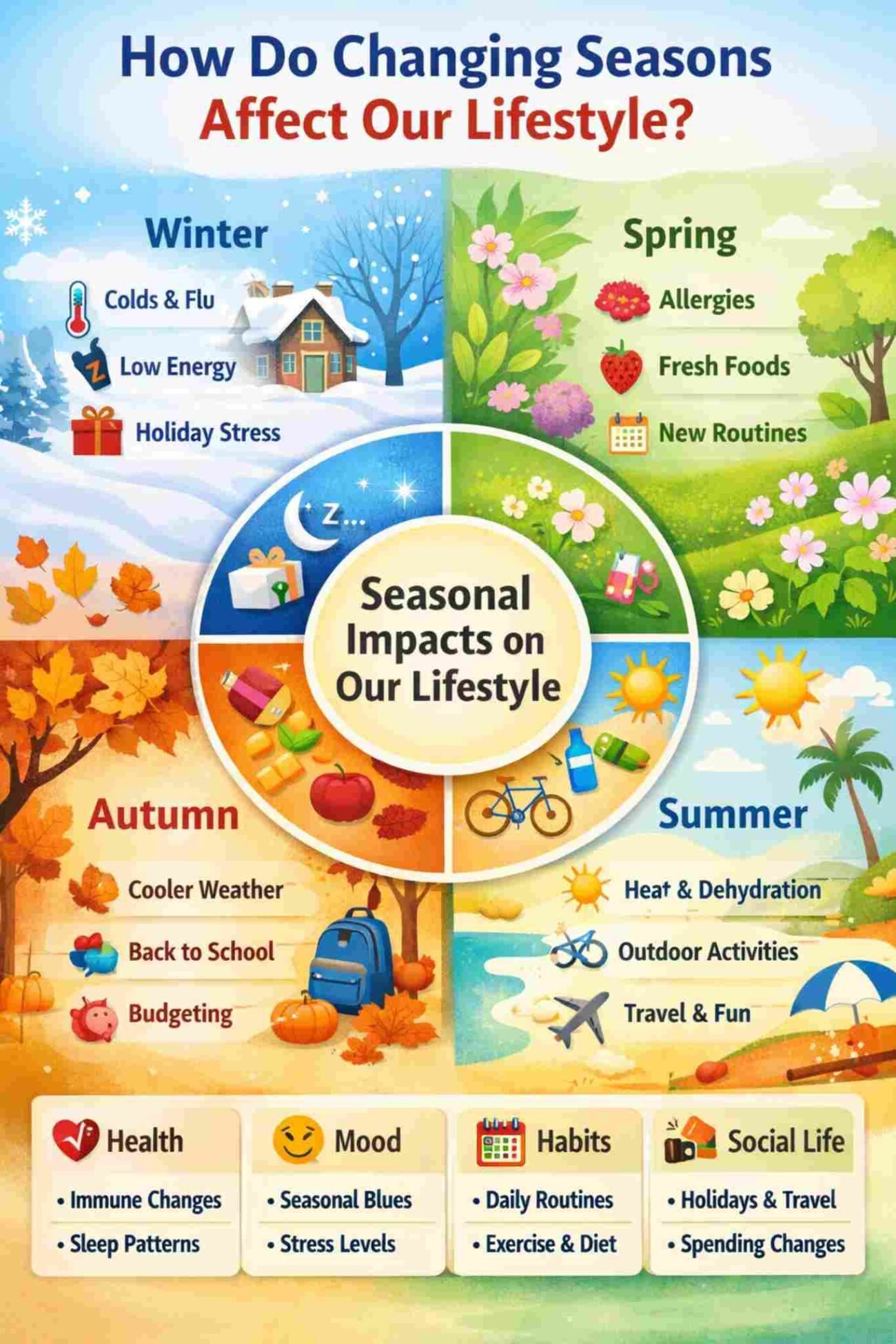
As the seasons change, our daily life changes too. The weather becomes hot or cold. The days become longer or shorter. Plants grow, leaves fall, and the air feels different. All these changes affect how we live, think, eat, work, and spend our time.
Seasons do more than change the weather. They affect our body, mood, habits, and even our money. Let’s look at how changing seasons affect our lifestyle in simple and clear ways.
1. How Seasons Affect Our Physical Health
Different seasons bring different health effects.
A. Common Health Changes by Season
| Season | Common Health Problems | How It Affects Daily Life |
|---|---|---|
| Winter | Cold, flu, dry skin | Stay indoors more |
| Spring | Allergies, sneezing | Use medicine, avoid pollen |
| Summer | Dehydration, sunburn | Drink more water, avoid heat |
| Autumn | Tiredness, mild sickness | Prepare for colder weather |
B. Energy and Sleep Changes
Seasons change how much sunlight we get. Sunlight controls our sleep and energy.
In Winter:
-
Days are shorter
-
Nights are longer
-
We may feel sleepy more often
-
It can be harder to wake up
In Summer:
-
Days are longer
-
We feel more active
-
We may sleep later
-
We spend more time outside
Even small time changes (like daylight saving time) can disturb our sleep for a few days.
C. Body Comfort Changes
Weather changes also affect how comfortable we feel.
-
Cold air can make skin dry.
-
Hot weather can make us tired.
-
Humid air can make us sweat more.
-
Weather pressure changes may cause headaches or joint pain.
Because of this, we change our clothes, exercise habits, and daily plans.
Read also: Simpciry
2. How Seasons Affect Mental Health
Seasons can change how we feel emotionally.
A. Seasonal Affective Disorder (SAD)
Some people feel very sad during fall and winter. This is called Seasonal Affective Disorder (SAD).
Symptoms may include:
-
Feeling sad most of the time
-
Low energy
-
Sleeping too much
-
Not wanting to meet people
-
Trouble focusing
This happens because there is less sunlight in winter.
B. Normal Mood Changes
Even if someone does not have SAD, many people notice mood changes.
| Season | Common Feelings | Behavior Changes |
|---|---|---|
| Winter | Quiet, low energy | Stay home more |
| Spring | Fresh start, hopeful | Clean, plan new goals |
| Summer | Happy, active | Travel, meet friends |
| Autumn | Calm, thoughtful | Prepare for new routines |
Each season brings a different emotional feeling.
C. Seasonal Stress
Some seasons bring more stress.
-
Winter: Holiday spending, family events
-
Spring: School exams, schedule changes
-
Summer: Travel planning, childcare needs
-
Autumn: Back to school, work pressure
These changes affect our mental health and daily routine.
3. How Seasons Change Our Daily Routine
Our daily habits often change with the weather.
A. Sleep Routine
| Season | Sunrise | Bedtime Habit |
|---|---|---|
| Winter | Late sunrise | Sleep earlier |
| Summer | Early sunrise | Sleep later |
When it gets dark early, we feel ready for bed earlier. When it stays light longer, we stay awake longer.
B. Work and Productivity
-
In winter, some people feel less motivated.
-
In spring, people often feel fresh and ready to start new projects.
-
In summer, energy levels are higher.
-
In autumn, people focus more on planning and organization.
Some jobs also depend on seasons, like farming, tourism, and retail.
C. Exercise and Activity
Winter:
-
Less outdoor exercise
-
More indoor workouts
-
More sitting time
Summer:
-
More walking and outdoor sports
-
Swimming and hiking
-
More movement overall
Weather plays a big role in how active we are.
4. How Seasons Affect Diet and Eating Habits
Our food choices change with the weather.
A. Food Cravings by Season
| Season | Common Food Choices | Why |
|---|---|---|
| Winter | Soup, bread, warm meals | To feel warm and full |
| Spring | Fresh vegetables | Feeling of renewal |
| Summer | Fruits, salads | Light and cooling |
| Autumn | Hearty meals | Preparing for cold |
B. Water and Vitamins
-
In summer, we need to drink more water.
-
In winter, we may need more Vitamin D because there is less sunlight.
-
Seasonal fruits and vegetables are often fresher and cheaper.
Eating seasonal food can be healthy and cost less.
5. How Seasons Affect Social Life
Seasons also change how we spend time with others.
A. Social Activities
| Season | Social Behavior |
|---|---|
| Winter | Indoor gatherings, holidays |
| Spring | Outdoor meetups |
| Summer | Travel, festivals |
| Autumn | School and work events |
Longer summer days make people more social. Cold winter days make people stay home more.
B. Clothing Changes
-
Winter: Jackets, coats, boots
-
Spring: Light jackets
-
Summer: Light clothes, sandals
-
Autumn: Sweaters, layers
We change our wardrobe every season to stay comfortable.
C. Hobbies
Winter Hobbies:
-
Reading
-
Cooking
-
Indoor games
Summer Hobbies:
-
Swimming
-
Gardening
-
Traveling
Seasons give us different ways to enjoy our free time.
6. How Seasons Affect Money and Spending
Seasonal changes also affect our finances.
A. Seasonal Expenses
| Season | Common Costs |
|---|---|
| Winter | Heating bills, holiday gifts |
| Spring | Home cleaning supplies |
| Summer | Travel, air conditioning |
| Autumn | School supplies, clothes |
Planning ahead can reduce financial stress.
B. Seasonal Jobs
Some jobs depend on seasons:
-
Tourism in summer
-
Retail during holidays
-
Farming during harvest time
This can affect income for many families.
7. How to Adjust to Seasonal Changes
We cannot stop seasons from changing, but we can prepare.
Tips for Staying Healthy:
-
Keep a regular sleep schedule
-
Spend time outside in sunlight
-
Exercise regularly
-
Eat balanced meals
-
Drink enough water
Tips for Mental Health:
-
Stay connected with friends and family
-
Plan activities you enjoy
-
Manage stress early
Tips for Financial Stability:
-
Save money for seasonal expenses
-
Plan major purchases in advance
Conclusion
Changing seasons affect our lifestyle in many ways. They influence our health, mood, sleep, food choices, social life, work habits, and spending. Winter may make us slow down. Summer may give us more energy. Spring feels like a fresh start. Autumn helps us prepare for change.
When we understand how seasons affect us, we can adjust better. We can take care of our body and mind. We can plan our time and money wisely. Instead of struggling with seasonal changes, we can learn to live in balance with them all year long.
