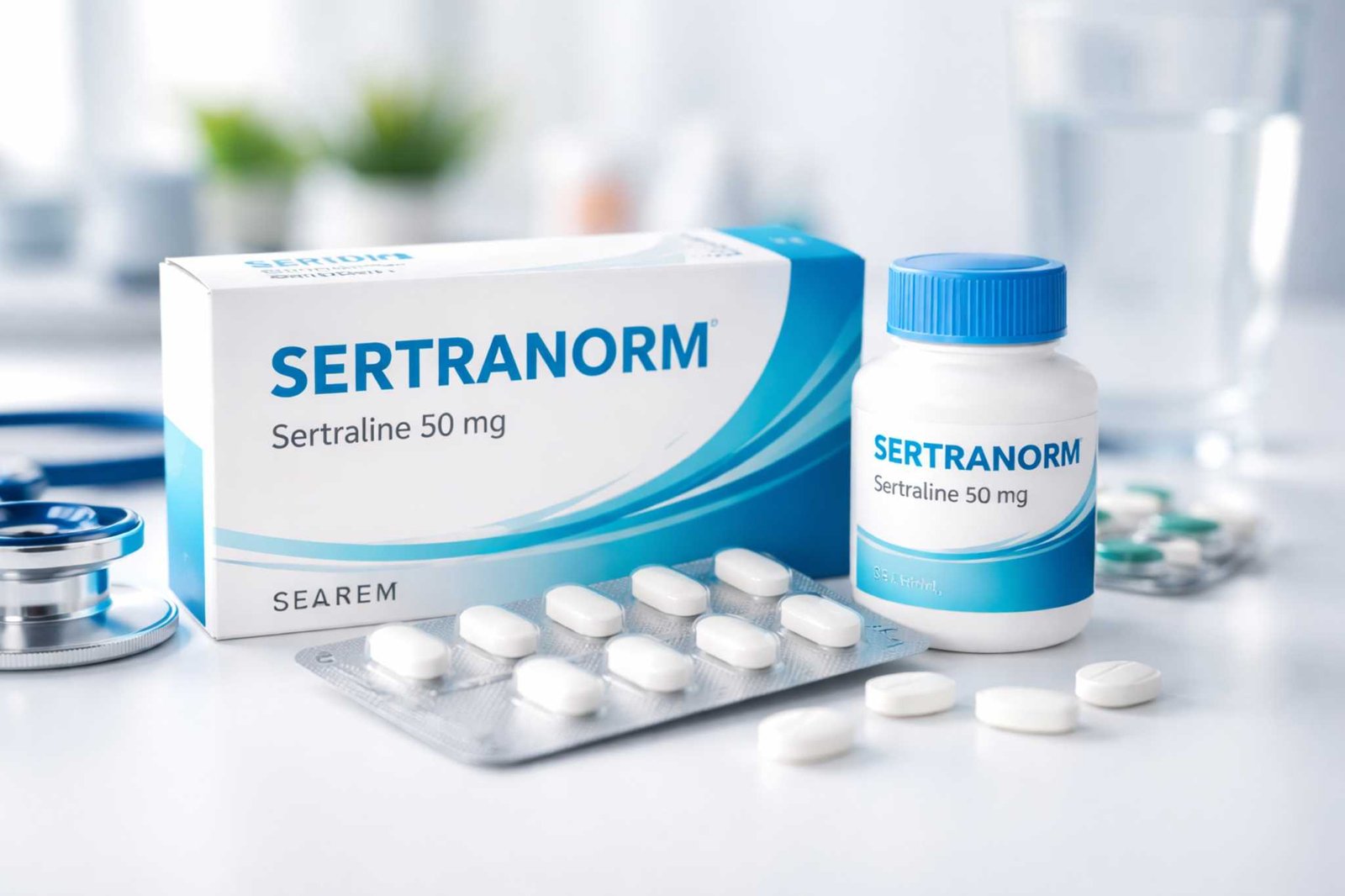
Sertranorm is a medicine used to treat depression and different kinds of anxiety problems. It contains a drug called sertraline. Sertraline belongs to a group of medicines called SSRIs (Selective Serotonin Reuptake Inhibitors). These medicines help improve mood and reduce anxiety by working on chemicals in the brain.
Many people around the world live with depression, panic attacks, social fear, or stress after trauma. These problems can make daily life hard. Sertranorm is often part of a treatment plan, which may also include talking therapy, healthy habits, and support from family or friends. This article explains Sertranorm in a clear and simple way, using lists and tables to make it easy to read.
What Is Sertranorm?
Sertranorm is a brand name of the medicine sertraline. Doctors prescribe it to help people feel better when they have long-lasting sadness or strong fear and worry.
Basic Facts About Sertranorm
| Item | Information |
|---|---|
| Medicine name | Sertranorm |
| Active ingredient | Sertraline |
| Type of drug | SSRI (antidepressant) |
| Main use | Depression and anxiety problems |
| How it is taken | By mouth (tablet) |
| How often | Once a day |
How Does Sertranorm Work?
Sertranorm works on a brain chemical called serotonin. Serotonin helps control:
-
Mood
-
Feelings
-
Sleep
-
Worry and fear
Simple Explanation
-
Nerve cells in the brain send messages using chemicals.
-
Serotonin is one of these chemicals.
-
In depression and anxiety, serotonin may not work well.
-
Sertranorm helps keep more serotonin active in the brain.
-
Over time, this can help improve mood and reduce anxiety.
When Will It Start to Work?
Sertranorm does not work right away. Most people notice changes:
-
After 2 to 4 weeks: small improvement
-
After 6 to 8 weeks: stronger and clearer benefit
It is normal if you do not feel better in the first days. Keep taking the medicine as your doctor tells you.
What Is Sertranorm Used For?
Doctors use Sertranorm to treat different mental health problems.
Main Conditions Treated
-
Depression – long-lasting sadness, low energy, loss of interest
-
Panic disorder – sudden panic attacks and strong fear
-
Social anxiety – fear of social situations
-
PTSD – stress and fear after a very bad or scary event
-
OCD – unwanted thoughts and repeated actions
Conditions and Benefits Table
| Problem | How Sertranorm Can Help |
|---|---|
| Depression | Improves mood and daily functioning |
| Panic disorder | Fewer panic attacks |
| Social anxiety | Less fear in social situations |
| PTSD | Less stress and emotional pain |
| OCD | Fewer unwanted thoughts and actions |
How to Take Sertranorm
Always take Sertranorm exactly as your doctor tells you.
General Rules
-
Take it once a day
-
Take it at the same time every day
-
You can take it with or without food
-
Do not stop taking it suddenly
Dose Information (General)
Doctors usually:
-
Start with a low dose
-
Slowly increase the dose if needed
-
Choose the right dose based on your symptoms and side effects
| Step | Why It Is Done |
|---|---|
| Low starting dose | Helps reduce side effects |
| Slow increase | Helps the body adjust |
| Maintenance dose | Keeps symptoms under control |
Who Should Not Take Sertranorm?
Some people should not use Sertranorm or must be very careful.
Do NOT Take Sertranorm If You:
-
Are allergic to sertraline
-
Take certain strong antidepressants called MAO inhibitors
-
Were told by your doctor not to use SSRIs
Be Careful If You:
-
Have liver problems
-
Are pregnant or breastfeeding
-
Have bipolar disorder
-
Are under 25 years old (need close monitoring)
Side Effects of Sertranorm
Many people take Sertranorm without serious problems. Some side effects are common at the start and may go away with time.
Common Side Effects
-
Nausea (feeling sick)
-
Diarrhea
-
Headache
-
Trouble sleeping or feeling sleepy
-
Dry mouth
-
Sweating more than usual
Serious Side Effects (Rare but Important)
-
Strong mood changes
-
Thoughts about hurting yourself
-
Very high fever, shaking, fast heartbeat (signs of serotonin syndrome)
-
Easy bleeding or bruising
Side Effects Table
| Type | Examples |
|---|---|
| Common | Nausea, headache, sleep problems |
| Less common | Anxiety, restlessness |
| Serious | Suicidal thoughts, serotonin syndrome |
If side effects are strong or worrying, talk to your doctor right away.
Medicines and Things That Can Interact with Sertranorm
Sertranorm can react with other medicines and substances.
Things That May Cause Problems
-
Other antidepressants
-
Migraine medicines
-
Blood thinners
-
Herbal products like St. John’s wort
-
Alcohol
Interaction Table
| Mixed With | What Can Happen |
|---|---|
| Other serotonin drugs | Risk of serotonin syndrome |
| Blood thinners | More bleeding risk |
| Alcohol | More sleepiness and poor focus |
Always tell your doctor about all medicines and supplements you take.
Use in Special Groups
Children and Teenagers
-
Sometimes used for OCD
-
Need close watching for mood changes
Older Adults
-
May feel dizzy more easily
-
May need lower doses
Pregnant or Breastfeeding Women
-
Doctor must weigh risks and benefits
-
Never start or stop without medical advice
How to Store Sertranorm
-
Store at room temperature
-
Keep away from heat and moisture
-
Keep out of reach of children
-
Do not use after the expiry date
Helpful Tips for Patients
-
Take your medicine every day
-
Do not skip doses
-
Be patient with results
-
Combine medicine with therapy if possible
-
Try healthy habits: sleep well, eat well, move your body
-
Talk openly with your doctor about how you feel
Conclusion
Sertranorm is a common and helpful medicine for people with depression and anxiety problems. It works by helping a brain chemical called serotonin work better. This can improve mood, lower fear, and help people feel more balanced in daily life.
Even though Sertranorm helps many people, it is not a “quick fix.” It takes time to work, and some side effects can happen, especially at the start. With proper medical guidance, patience, and support, Sertranorm can be an important part of recovery and better mental health.
