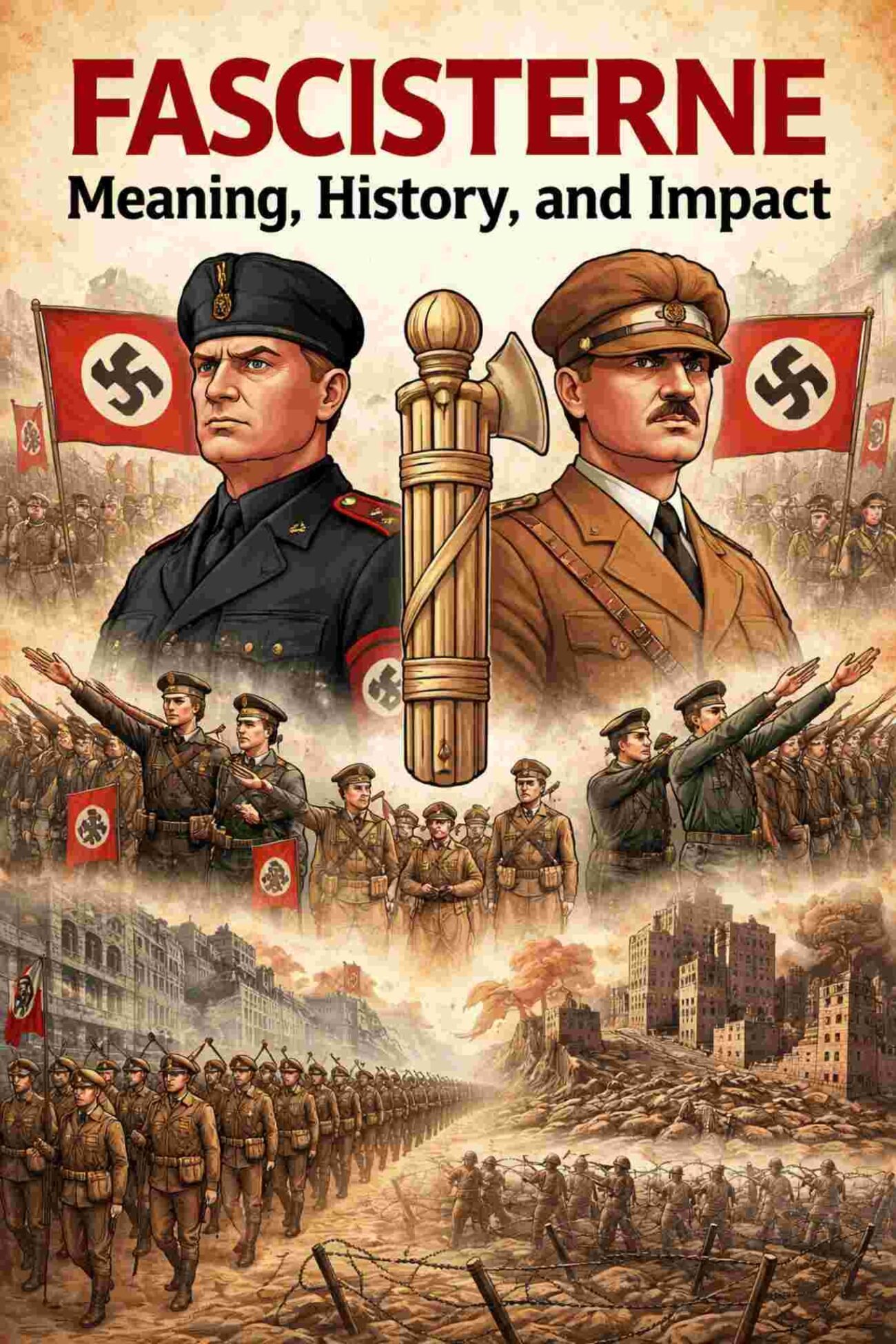
The word “fascisterne” is Danish and Norwegian. In English, it means “the fascists.” It refers to people who support fascism, a political system that gives full power to one strong leader and the state.
Fascism became important in Europe in the early 1900s. It had a huge impact on world history. To understand “fascisterne,” we need to look at where fascism started, what it believed, and what happened because of it.
1. How Fascism Started
Fascism began after World War I. Many countries in Europe were in crisis.
Problems After World War I
-
High unemployment
-
Poverty and hunger
-
Political fights
-
Weak governments
-
Fear of communism
People were tired of problems and wanted strong leadership. This made it easier for fascist ideas to grow.
In Italy, fascism was led by Benito Mussolini. He formed the Fascist Party in 1919. In 1922, he took control of the government and became a dictator.
In Germany, Adolf Hitler led the Nazi Party. Nazism was similar to fascism but added strong racist ideas. Both systems gave total power to one leader.
2. Main Ideas of Fascisterne
Fascism has clear and strong beliefs. These ideas were followed by fascisterne.
Core Beliefs
-
One Strong Leader
-
The leader has full control.
-
No real democracy.
-
-
Extreme Nationalism
-
The country is more important than the individual.
-
Strong pride in the nation.
-
-
Against Democracy
-
Elections may exist but are not fair.
-
Opposition parties are banned.
-
-
Military Power
-
The army is very important.
-
War is seen as a way to gain power.
-
-
Control of Media
-
The government controls newspapers and radio.
-
Only positive news about the leader is allowed.
-
-
No Freedom for Opponents
-
Critics can be jailed.
-
Freedom of speech is limited.
-
Table 1: Simple Overview of Fascist Ideas
| Idea | What It Means |
|---|---|
| Dictatorship | One person rules the country |
| Nationalism | Strong pride and loyalty to the nation |
| No Democracy | People do not choose leaders freely |
| Militarism | Army and war are valued |
| Propaganda | Government controls information |
| Repression | People who disagree are punished |
3. How Fascist Governments Worked
Fascist governments controlled many parts of life.
Political System
-
One political party only
-
Leader treated like a hero
-
Secret police
-
Strict laws
-
No free press
The government wanted full control over politics, schools, media, and even culture.
4. Symbols and Public Shows
Fascisterne used symbols and large public events to show power.
Common features included:
-
Uniforms
-
Large rallies
-
Military marches
-
Flags and symbols
-
Salutes
These events made people feel united and loyal to the leader.
5. Impact on the World
Fascist governments caused great damage in the world.
One major result was World War II. This war lasted from 1939 to 1945 and caused millions of deaths.
Under Nazi rule in Germany:
-
Six million Jews were murdered in the Holocaust.
-
Many others were also killed.
-
Cities were destroyed.
-
Countries were invaded.
Table 2: Short-Term and Long-Term Effects
| Short-Term Effects | Long-Term Effects |
|---|---|
| World War II | Creation of stronger human rights laws |
| Millions of deaths | Formation of the United Nations |
| Destruction of cities | Greater focus on democracy |
| Fear and repression | Ongoing lessons from history |
6. Fascisterne in Scandinavia
In Denmark and Norway, there were small fascist groups. They were not as strong as in Italy or Germany. However, some people supported fascist ideas during World War II.
Today, the word “fascisterne” is sometimes used in political arguments. It can describe real extremist groups. Sometimes it is also used as an insult.
7. Modern Relevance
Fascism officially ended in 1945, but people still talk about it today.
The term is often used when people see:
-
Strong leaders who weaken democracy
-
Attacks on media
-
Extreme nationalism
-
Discrimination against minorities
However, some experts say the word should be used carefully. It has a serious historical meaning.
8. Warning Signs Often Linked to Fascism
Historians say societies should watch for these signs:
-
Leaders gaining too much power
-
Weakening of courts or parliaments
-
Blaming minority groups for problems
-
Limiting freedom of speech
-
Controlling news and information
Understanding these signs helps protect democracy.
Conclusion
“Fascisterne” means “the fascists.” It refers to people who supported a system of strong dictatorship, extreme nationalism, and control over society. Fascism began after World War I during a time of crisis. It promised strength and unity, but it led to war, suffering, and millions of deaths. Learning about fascisterne is important because it reminds us how fragile democracy can be. By understanding history, societies can better protect freedom, human rights, and peace in the future.
