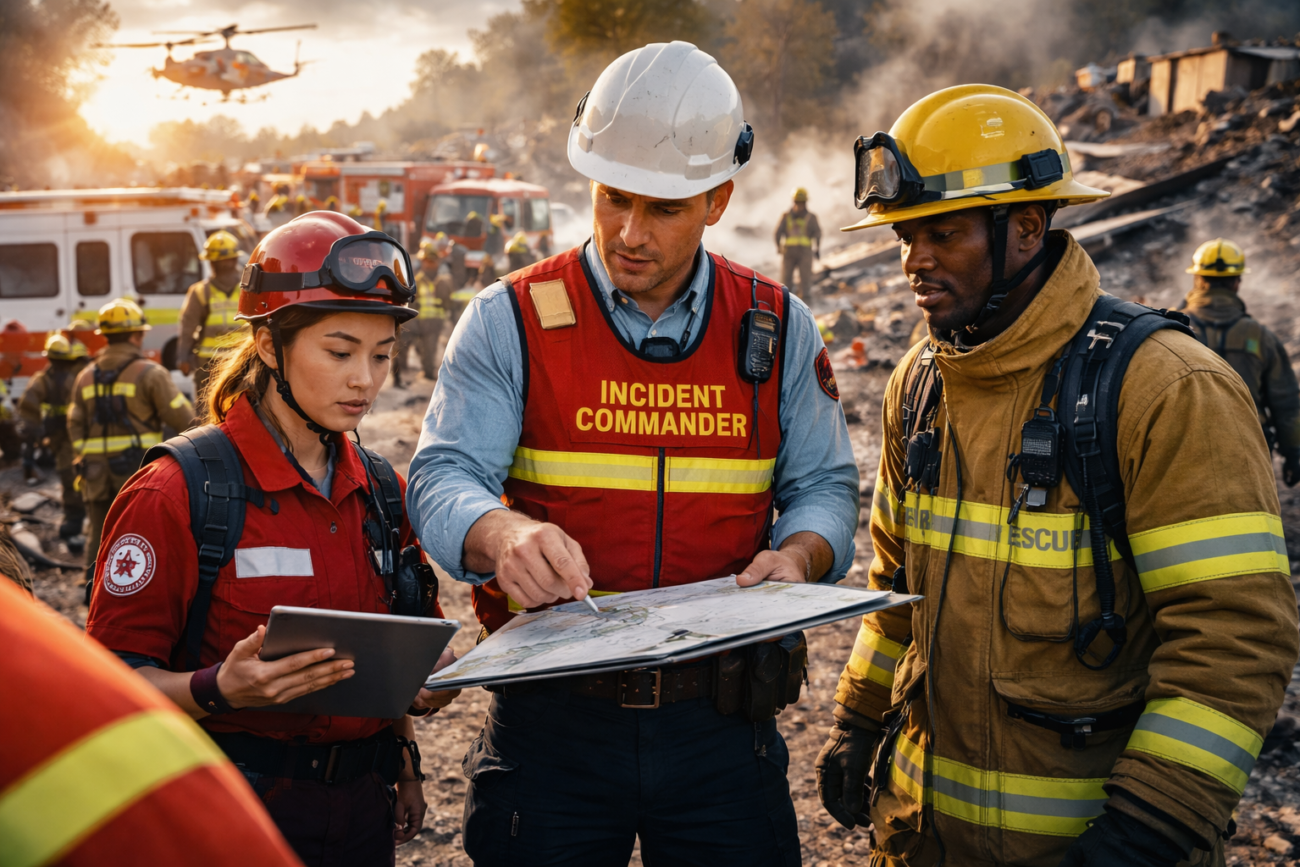
Disasters such as floods, earthquakes, storms, wildfires, and industrial accidents can happen at any time. When these events occur, disaster management crews work on the front lines to help people, save lives, and reduce damage. These teams include firefighters, rescue workers, medical teams, emergency responders, and volunteers. Disaster response is not easy. Responders often work in dangerous places, under pressure, and for long hours. Because of this, it is very important to empower disaster management crews so they can do their jobs safely and effectively. Empowering disaster teams means giving them the right training, tools, leadership, support, and resources they need to handle emergencies. When disaster responders are well prepared and supported, they can respond faster and help more people.
Why Empowering Disaster Management Crews Is Important
When disaster teams are strong and well prepared, they can manage emergencies better. This helps reduce injuries, save lives, and protect communities.
Benefits of Empowering Disaster Crews
-
Faster rescue operations
-
Better teamwork between emergency services
-
Safer working conditions for responders
-
Improved disaster preparedness
-
Stronger and safer communities
| Benefit | How It Helps |
|---|---|
| Faster response | Victims receive help quickly |
| Better coordination | Teams work together smoothly |
| Proper equipment | Responders work safely |
| Skilled workers | Rescue operations become more effective |
| Strong leadership | Emergency situations are handled better |
Provide Proper Training and Skill Development
Training is one of the most important ways to empower disaster management crews. Emergency responders must know how to act in different disaster situations.
Regular Training Programs
Training programs help responders practice their skills before real disasters happen. Drills and exercises teach teams how to react quickly and work together.
Common training activities include:
-
Disaster simulation exercises
-
Fire safety drills
-
Flood rescue practice
-
Emergency evacuation training
-
First aid training
These activities help teams stay prepared and confident.
Read also: Shani Levni
Specialized Technical Training
Some disaster situations require special skills. Responders must learn how to manage different types of emergencies.
Important Skills for Disaster Responders
| Skill | Purpose |
|---|---|
| Search and rescue | Find and save trapped people |
| First aid and medical care | Treat injured victims |
| Fire control | Stop and control fires |
| Hazard handling | Manage chemical or dangerous materials |
| Risk assessment | Identify possible dangers |
Learning these skills makes rescue operations safer and more effective.
Continuous Learning
Disaster management methods change over time. Responders must keep learning new skills and technologies.
Continuous learning can include:
-
Training workshops
-
Professional courses
-
Emergency management certifications
-
Knowledge sharing between organizations
Provide Modern Technology and Equipment
Technology helps disaster management crews respond to emergencies more quickly and efficiently.
Communication Systems
During disasters, communication is very important. Emergency teams must stay connected to coordinate their actions.
Important Communication Tools
-
Emergency radios
-
Satellite phones
-
Mobile emergency apps
-
Disaster management software
| Tool | Use |
|---|---|
| Satellite phone | Works when regular networks fail |
| Radio system | Allows team communication |
| Mobile apps | Share updates quickly |
| Command systems | Manage emergency operations |
Reliable communication helps teams make quick decisions.
Disaster Monitoring Tools
Modern technology helps responders understand the situation in disaster areas.
Examples include:
-
Drones for aerial views
-
GIS maps for location tracking
-
Satellite images
-
Early warning systems
These tools help emergency teams see affected areas and plan rescue operations.
Data and Information Systems
Data tools help responders make better decisions. These systems can collect and analyze information during disasters.
They help teams:
-
Track weather and disaster patterns
-
Identify high-risk areas
-
Plan rescue operations
-
Use resources efficiently
Strengthen Leadership and Decision-Making
Strong leadership is essential during emergencies. Disaster management crews must follow clear instructions and plans.
Clear Command Structure
A clear command system helps teams know who is responsible for each task.
Important parts of a command structure include:
-
Defined roles and responsibilities
-
Central emergency command center
-
Clear communication lines
-
Standard operating procedures (SOPs)
| Leadership Factor | Importance |
|---|---|
| Clear roles | Everyone knows their duty |
| Command system | Improves coordination |
| Leadership training | Helps leaders make good decisions |
| Team cooperation | Improves teamwork |
Empower Frontline Responders
In many situations, responders must act quickly. Giving frontline teams the power to make decisions helps them respond faster.
Benefits include:
-
Faster rescue actions
-
Flexible response to changing situations
-
More efficient operations
Protect the Mental and Physical Health of Responders
Disaster responders often face stressful and dangerous situations. It is important to protect their mental and physical health.
Mental Health Support
Seeing destruction and injuries can affect responders emotionally. Mental health support helps them manage stress.
Types of Mental Health Support
-
Counseling services
-
Peer support programs
-
Stress management training
-
Recovery programs after disasters
Supporting mental health helps responders stay strong and focused.
Physical Safety Measures
Emergency workers must be protected from danger during rescue operations.
Essential Safety Equipment
| Equipment | Purpose |
|---|---|
| Protective clothing | Protects from hazards |
| Helmets and gloves | Prevent injuries |
| Rescue gear | Helps save victims safely |
| Medical kits | Treat injuries quickly |
Providing proper equipment keeps responders safe.
Recognition and Motivation
Disaster responders work very hard to help others. Recognizing their efforts improves morale and motivation.
Ways to motivate responders include:
-
Public recognition and awards
-
Career opportunities
-
Financial support
-
Community appreciation
Improve Resources and Disaster Infrastructure
Disaster management teams need enough resources and infrastructure to respond effectively.
Adequate Funding
Governments and organizations must invest in disaster management programs. Funding supports:
-
Training programs
-
Equipment purchases
-
Emergency response centers
-
Disaster research and planning
Essential Disaster Response Equipment
Emergency teams need proper tools to perform rescue operations.
Examples include:
-
Rescue vehicles
-
Boats for flood rescue
-
Medical supplies
-
Emergency shelters
-
Food and water supplies
| Resource | Role |
|---|---|
| Rescue vehicles | Transport victims and responders |
| Medical kits | Provide emergency treatment |
| Communication tools | Help teams stay connected |
| Emergency shelters | Protect displaced people |
Improve Communication and Coordination
Disaster response requires cooperation between many organizations and agencies.
Interagency Cooperation
Different groups must work together during disasters. These groups may include:
-
Fire departments
-
Police services
-
Medical teams
-
Government agencies
-
Non-governmental organizations (NGOs)
Working together improves disaster response.
Community Communication
Communities should know how to prepare for disasters. Public education programs help people understand how to stay safe.
Examples include:
-
Disaster awareness campaigns
-
Evacuation training
-
First aid training
-
Safety education programs
Information Sharing
Sharing information quickly helps responders work efficiently. Digital platforms allow teams to exchange updates and coordinate rescue operations.
Encourage Community Participation
Communities play an important role in disaster response and recovery.
Volunteer Networks
Volunteers can support disaster management crews during emergencies.
Volunteer Activities
-
Helping with evacuations
-
Distributing relief supplies
-
Supporting rescue teams
-
Providing first aid assistance
Public Preparedness Programs
Educating people about disasters helps reduce risks. Prepared communities respond better during emergencies.
Programs may include:
-
Disaster preparedness training
-
Safety workshops
-
Emergency response education
Citizen Reporting Systems
Mobile apps and emergency reporting systems allow people to report disasters quickly. This helps responders receive accurate information and respond faster.
Conclusion
Empowering disaster management crews is essential for effective disaster response and emergency management. When responders receive proper training, modern technology, strong leadership, and mental health support, they can handle emergencies more effectively. Investing in disaster management helps protect lives, reduce damage, and build stronger communities. Governments, organizations, and communities must work together to support disaster responders and create better disaster response systems. With the right support and preparation, empowered disaster management crews can respond quickly, save lives, and help communities recover from disasters.
