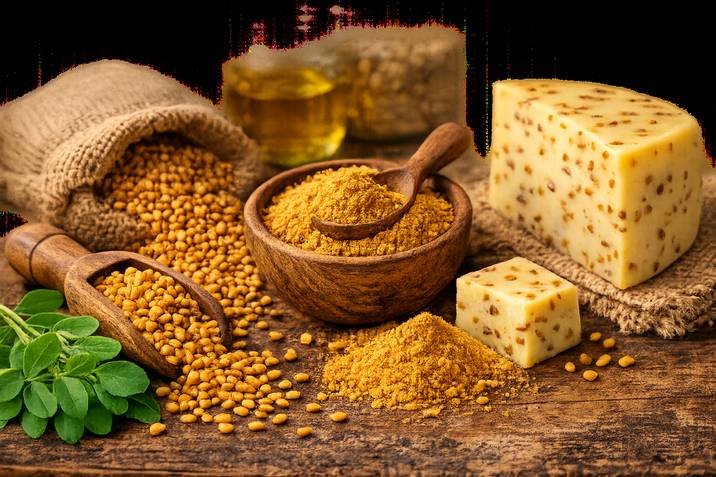
Foenegriek, also called fenegriek or fenugreek, is a plant that people use as a spice, food ingredient, and herbal product. It has been used for thousands of years in cooking and traditional remedies. In some countries, fenugreek is also used for animals and in cheese making.
In this guide, you will learn:
-
what foenegriek (fenugreek) is,
-
how it tastes,
-
how people use it in food,
-
what nutrients it contains,
-
and what to be careful about when using it.
What Is Foenegriek (Fenugreek)?
Foenegriek comes from a plant called Trigonella foenum-graecum. The seeds of this plant are used the most. The leaves can also be eaten, but they are less common in Europe.
Different names for the same plant
| Name | Language or Region |
|---|---|
| Foenegriek | Dutch |
| Fenegriek | Dutch (other spelling) |
| Fenugreek | English |
| Greek hay | Old name |
| Methi | India |
All these names mean the same plant.
Where Does Fenugreek Come From?
Fenugreek started in:
-
the Middle East
-
South Asia
-
the Mediterranean area
People have used it for a very long time.
Historical use
-
In ancient Egypt: used in food and for smell
-
In India: used in cooking and traditional herbal use
-
In North Africa: used in bread and soups
-
In Europe: later used in spice mixes and cheese
Taste and Smell
Fenugreek has a strong taste. Some people like it, others find it bitter.
Taste and smell by form
| Form | Taste and Smell |
|---|---|
| Whole seeds | Bitter, nut-like |
| Roasted seeds | Warm, mild, nice smell |
| Powder | Strong, spicy |
| In cheese | Soft, nut-like taste |
Tips to reduce bitter taste
-
Roast the seeds lightly in a dry pan
-
Soak the seeds in water before cooking
-
Use only a small amount
How to Use Fenugreek in Cooking
Fenugreek is often used in:
-
Indian food
-
Middle Eastern food
-
North African food
Common food uses
Fenugreek is used in:
-
curry
-
soups
-
lentils
-
rice dishes
-
bread
-
vegetable dishes
When to add fenugreek while cooking
| Form | When to Add |
|---|---|
| Whole seeds | At the start of cooking |
| Powder | Near the end |
| Leaves | Last few minutes |
Fenugreek in Cheese Making
Fenugreek is sometimes added to cheese. This gives the cheese a special taste and look.
What fenugreek does in cheese
-
Gives a light nut taste
-
Adds a soft spicy smell
-
Makes the cheese look special (small seeds inside)
Simple guide for cheese use
| Milk Amount | Fenugreek Seeds |
|---|---|
| 10 liters | 5–10 grams |
| 20 liters | 10–20 grams |
(You can change the amount to match your taste.)
Nutrients in Fenugreek
Fenugreek seeds contain:
-
fiber
-
plant protein
-
minerals (like iron and magnesium)
-
natural plant compounds
Main nutrients and their role
| Nutrient | What It Helps With |
|---|---|
| Fiber | Helps digestion |
| Protein | Part of body building |
| Minerals | Support normal body work |
| Plant compounds | Used in herbal traditions |
Fenugreek as a Herbal Product (Supplements)
Fenugreek is sold as:
-
capsules
-
powder
-
tea
People use it as part of their daily routine for general support.
Common traditional reasons for use
-
to support digestion
-
to support appetite
-
as part of herbal mixes
Note: Herbal products are not medicine and do not replace a healthy diet.
Safety and Side Effects
Fenugreek is safe in normal food amounts. When used in large amounts (for example, as supplements), some people may feel side effects.
Possible side effects
-
stomach pain
-
gas
-
change in body smell
People who should be careful
| Group | What to Do |
|---|---|
| Pregnant people | Talk to a doctor first |
| Breastfeeding | Talk to a doctor first |
| People on medicine | Check with doctor/pharmacist |
| Allergies | Try a small amount first |
Fenugreek for Animals
Fenugreek is also used for animals, especially horses.
Why people use it for animals
-
animals often like the taste
-
used in feed mixes
-
used in herbal animal products
Important notes
-
Use only products made for animals
-
Follow the correct dose
-
If the animal is sick, ask a vet
Buying and Storing Fenugreek
You can buy fenugreek as:
-
whole seeds
-
powder
-
capsules
Comparison of forms
| Form | Good Points | Not So Good Points |
|---|---|---|
| Whole seeds | Last long, fresh taste | Need to grind |
| Powder | Easy to use | Loses smell faster |
| Capsules | Easy dose | Not for cooking |
How to store fenugreek
-
Keep in a closed container
-
Store in a cool, dark place
-
Keep away from water and heat
Frequently Asked Questions
Is foenegriek the same as fenegriek?
Yes, they are the same thing.
Does fenugreek taste like curry?
It smells a bit like curry, but it is a different spice.
Can I use fenugreek every day?
Yes, in normal food amounts. For supplements, use with care.
Summary
Fenugreek (foenegriek) is a useful and interesting plant. People use it:
-
in cooking,
-
in cheese,
-
in herbal products,
-
and sometimes for animals.
It has a strong taste, many traditional uses, and can be part of a normal diet when used in small amounts. When using fenugreek as a supplement, it is smart to be careful and ask for advice if you are unsure.
