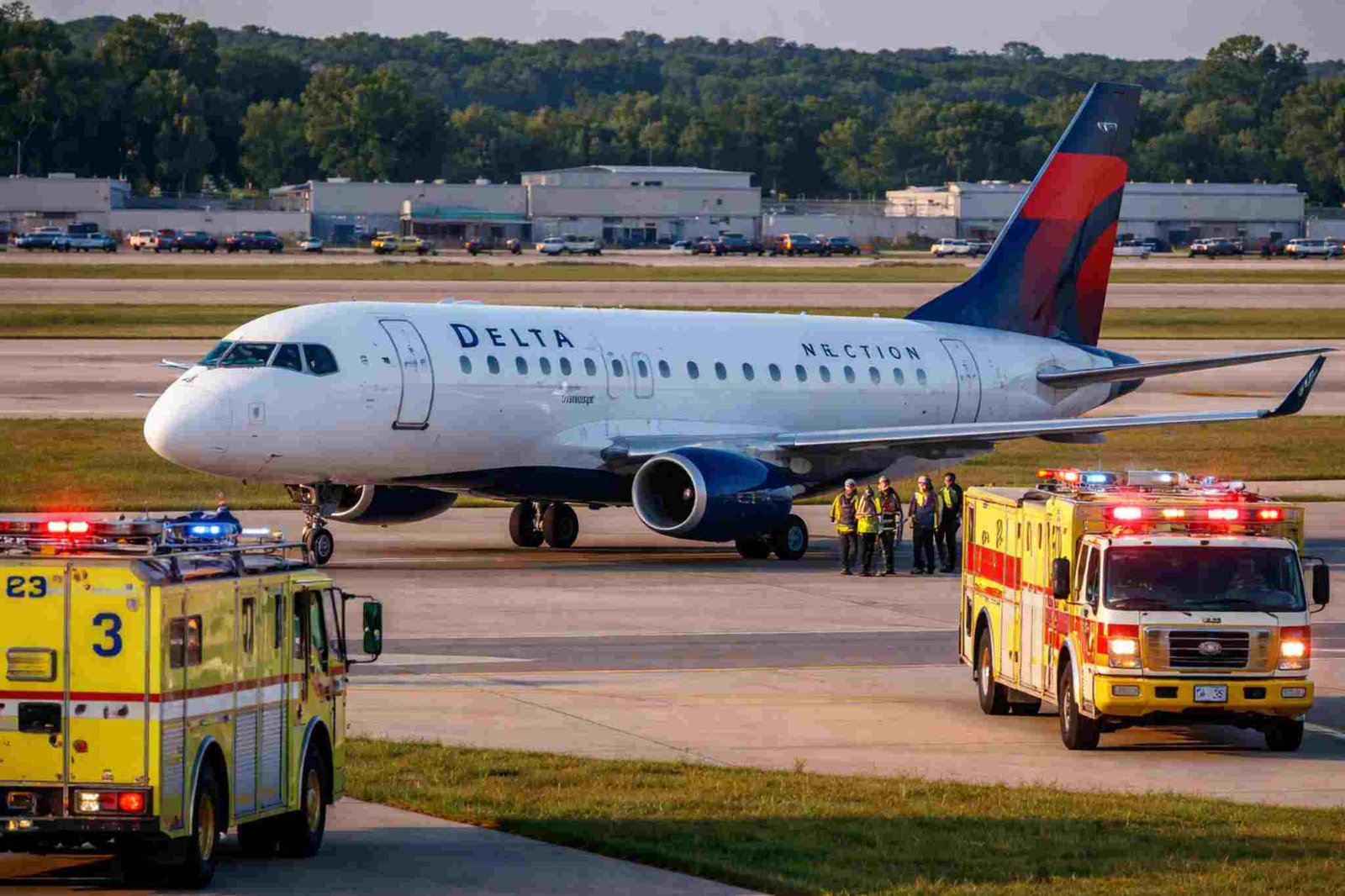
Air travel is usually very safe and smooth. Millions of flights take off and land every year without problems. Still, sometimes small technical issues happen. When this occurs, pilots may decide to return to the airport as a safety step. This is what happened with Delta Connection Flight DL3543. The flight declared an emergency shortly after takeoff and safely returned to Minneapolis–Saint Paul International Airport (MSP).
Even though the word “emergency” can sound scary, this situation ended safely. No passengers or crew were hurt. This article explains what happened, why the pilots made this decision, and what this event teaches us about airline safety, using simple and clear language.
1. Basic Details of the Flight
Here is a simple summary of the main facts:
| Item | Information |
|---|---|
| Flight number | Delta Connection DL3543 |
| Airline | Delta Air Lines (regional flight) |
| Airport of departure | Minneapolis–Saint Paul (MSP) |
| When problem happened | Shortly after takeoff |
| What happened | Emergency declared, flight returned |
| Final result | Safe landing, no injuries |
| Emergency teams | Waiting on the ground (just in case) |
This table shows that the flight returned as a safety step and that everyone was safe.
2. Why Did the Plane Return?
Shortly after the plane took off, the pilots saw a warning or unusual sign in the cockpit. This could be related to a system like cabin pressure or another part of the plane. Pilots are trained to take any warning seriously, even if it might be a small problem.
Common Reasons a Plane May Return
Planes return to the airport for many possible reasons, such as:
-
A warning light in the cockpit
-
A system not working as expected
-
A strange sound, smell, or vibration
-
A medical problem with a passenger
-
A bird hitting the plane during takeoff
In many cases, these issues turn out to be minor. Still, pilots choose the safest option. Returning early is often the best choice because the plane is close to the airport and help is nearby.
3. What Does “Emergency Landing” Really Mean?
The words “emergency landing” can make people think something very dangerous is happening. In reality, it often means the pilots want to land as soon as possible to check a possible problem.
What Happens When Pilots Declare an Emergency
When a pilot declares an emergency:
-
The plane gets priority to land first
-
Air traffic control clears the runway
-
Emergency vehicles wait near the runway
-
Other planes may be delayed for a short time
This does not always mean the plane is in serious danger. It is a safety step to make sure the plane can land quickly and safely.
Simple Comparison
| What People Often Think | What It Usually Means |
|---|---|
| The plane is about to crash | The pilots want to be extra safe |
| Something very serious failed | A warning needs to be checked |
| Passengers are in great danger | Most emergency returns end safely |
4. What Did the Pilots Do?
Pilots are trained for many different situations. When they saw the warning, they followed their training and safety rules.
Steps the Pilots Likely Followed
-
✔️ Checked the warning on their screens
-
✔️ Followed safety checklists
-
✔️ Talked to air traffic control
-
✔️ Decided to return to MSP
-
✔️ Landed the plane safely
This shows how pilots do not take risks when something seems wrong. Safety always comes first.
5. What Happened on the Ground?
When the plane returned to the airport, emergency teams were ready. This is normal procedure.
Who Was Ready to Help?
| Team | What They Do |
|---|---|
| Fire crews | Ready in case of smoke or fire |
| Medical teams | Ready if anyone feels unwell |
| Airport staff | Help guide the plane and passengers |
| Maintenance teams | Check the plane for problems |
Even though these teams were waiting, they were not needed for any serious action because the landing was safe and calm.
6. What Did Passengers Experience?
For passengers, an emergency return can be stressful, especially if they do not know what is happening.
What Passengers Usually See
-
The plane turns back toward the airport
-
The captain may speak to passengers
-
Fire trucks may be seen near the runway
-
Passengers leave the plane after landing
-
The airline helps with rebooking or delays
Common Feelings of Passengers
-
Worry because of the word “emergency”
-
Confusion about the reason
-
Relief after landing safely
Clear and calm announcements from the crew can help passengers feel more relaxed.
7. Why Are Planes So Careful About Small Problems?
Modern airplanes have many safety systems. These systems are designed to warn pilots early, even if the problem is small. This helps prevent bigger problems later.
Safety Features on Modern Planes
-
✈️ Warning lights and messages in the cockpit
-
✈️ Backup systems for important parts
-
✈️ Regular maintenance checks
-
✈️ Clear safety rules for pilots
-
✈️ Strong training for emergency situations
Because of these systems, many flights return for checks even when there is no real danger.
Read also: Air France A350 Chicago Flight Return
8. Lessons from the DL3543 Incident
This event teaches us some simple but important lessons about flying.
Main Lessons
-
🔹 Returning early is safer than continuing with a possible problem
-
🔹 Emergency landings are often planned and calm
-
🔹 Pilots do not take chances with safety
-
🔹 Emergency teams are trained and ready
-
🔹 Air travel remains very safe overall
What Travelers Can Learn
| Concern | What You Can Remember |
|---|---|
| “Emergency landing sounds scary” | It is usually a safety step |
| “Is flying dangerous?” | Flying is still very safe |
| “Should I worry about warnings?” | Warnings help keep flights safe |
9. Why Delays Happen After Such Events
After a plane returns, it must be checked by engineers. This can take time.
Reasons for Delays
-
The plane needs a safety inspection
-
Parts may need to be checked or replaced
-
The airline may need to find another plane
-
Crew schedules may change
While delays are frustrating, they happen because safety checks are taken seriously.
10. Conclusion
The Delta Connection DL3543 emergency landing shows how airline safety works in real life. The pilots noticed a possible problem shortly after takeoff. Instead of taking any risk, they returned to the airport. Emergency teams were ready, and the plane landed safely. No one was hurt.
This event is a good example of how airlines, pilots, and airports work together to keep passengers safe. Emergency landings are often not about danger, but about being careful. For travelers, this should be reassuring. It shows that when something does not look right, the system is designed to act quickly and safely.
